
 Gun Reviews >
 Find a Dealer >
 Find a Club >
 Competitions >
 videos >
 Reader Survey >
Leupold VX-6HD 4-24×52 Gen 2 Review: Optics Without Compromise?
- Last updated: 04/11/2025
- Review

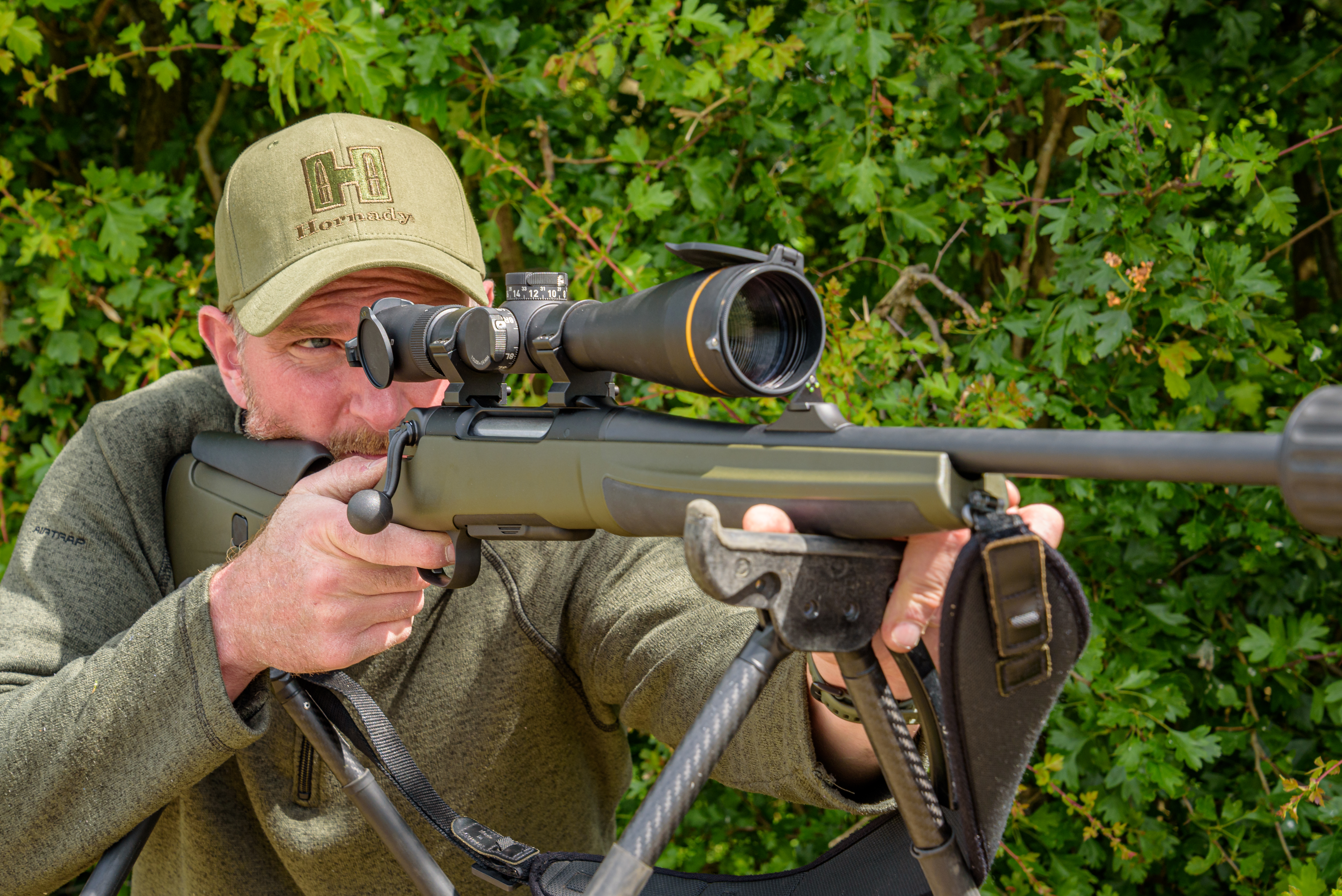
Leupold’s latest VX-6HD Gen 2 series of scopes builds on the performance and styling of the previous generation, combining top-tier optics and mechanics to deliver exceptional riflescope versatility. The build uses a 6x erector tube and zoom ratio, providing a wide field of view for close-range use, even when you choose a scope intended for long-range and precision shooting at high magnification.
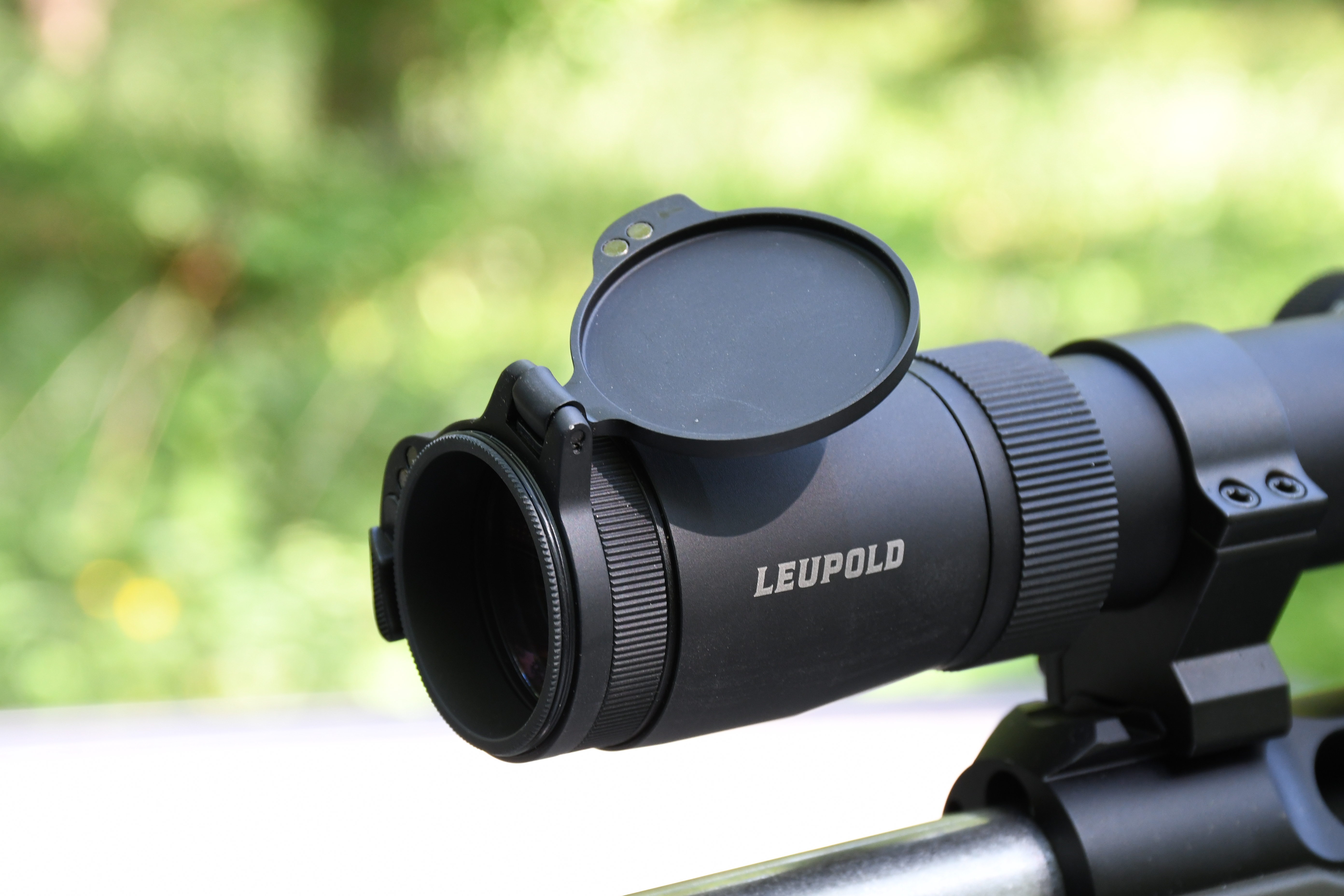
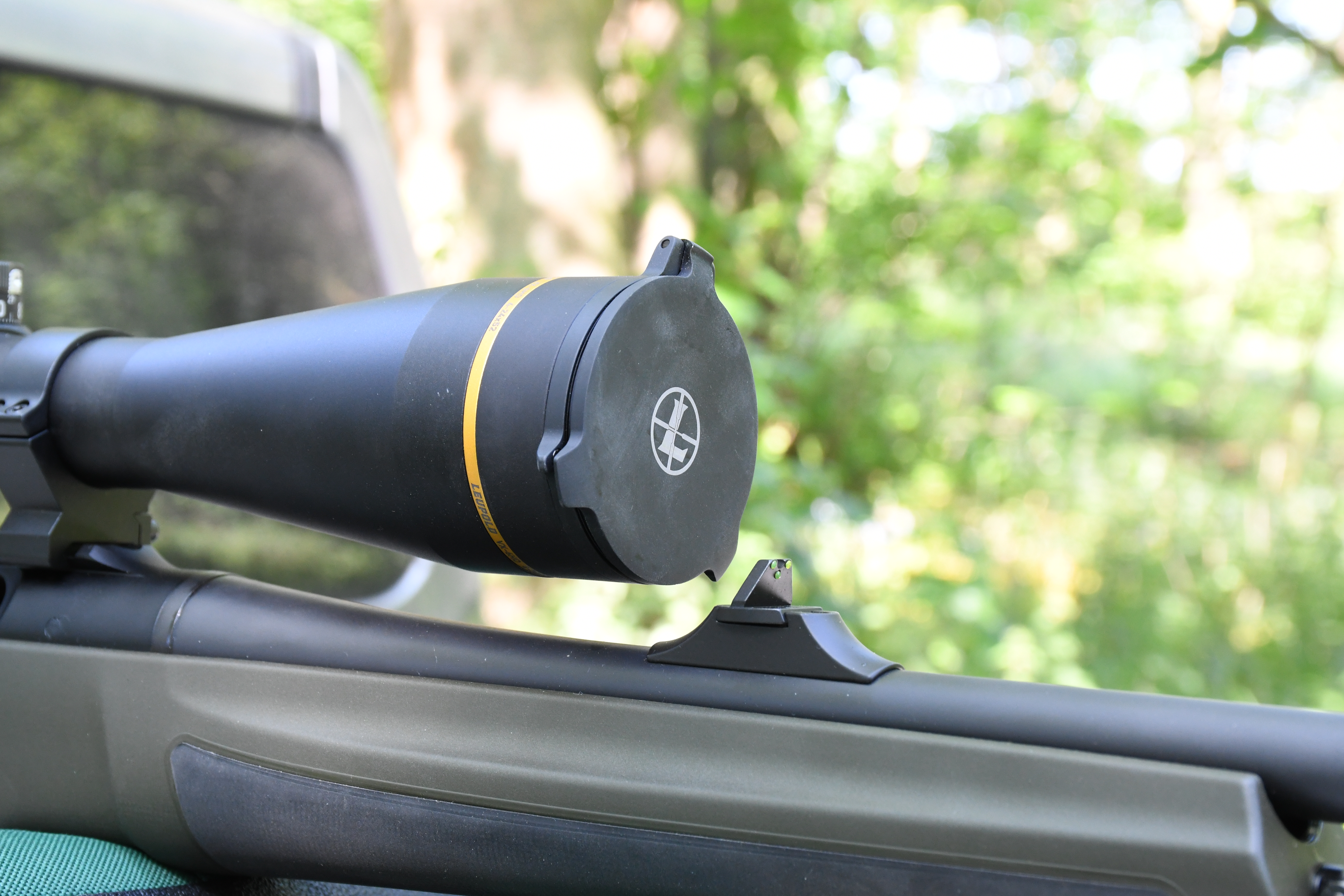
The VX-6HD models are available in 1-6×24, 2-12×42, 3-18×44, 3-18×50, 3-18×56, and the 4-24×52 unit seen here. The scope features a 34mm hard-anodised aluminium main tube, and both front and rear Alumina lens caps are included. These caps fold up silently and lock into position parallel to the body. The anodising is smooth and resists collecting skin dust.
What is the Leupold CDS SpeedSet Turret System?
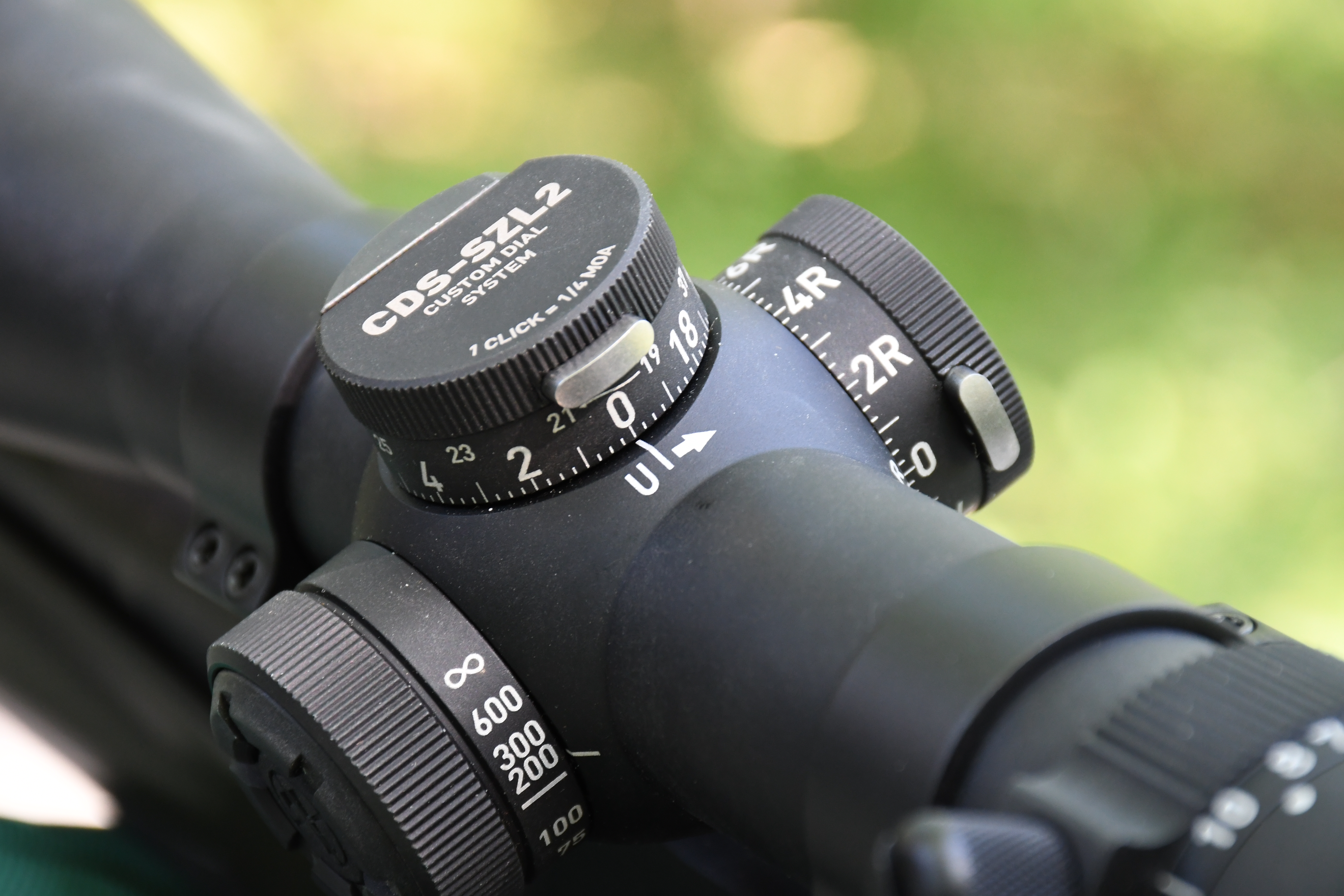
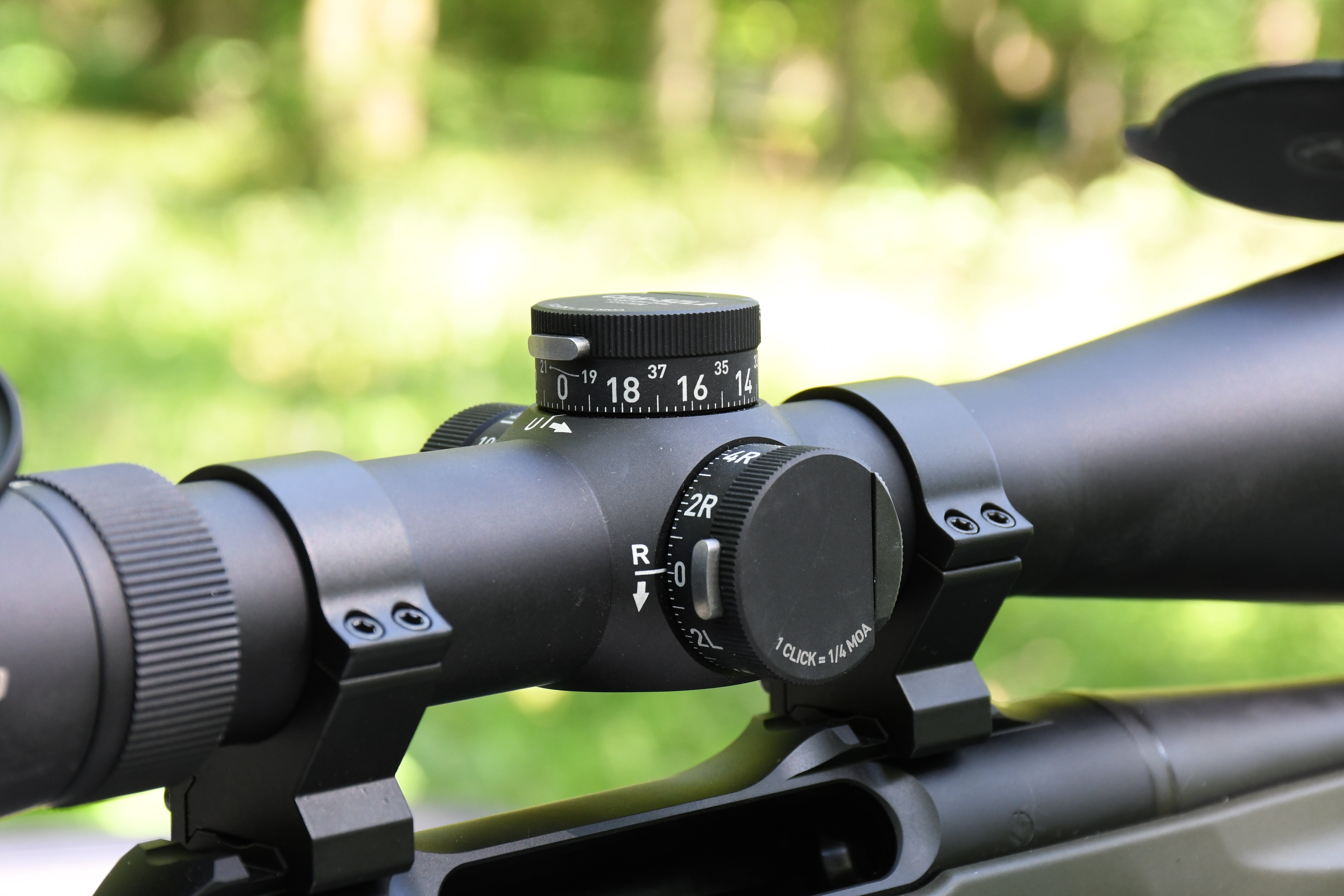
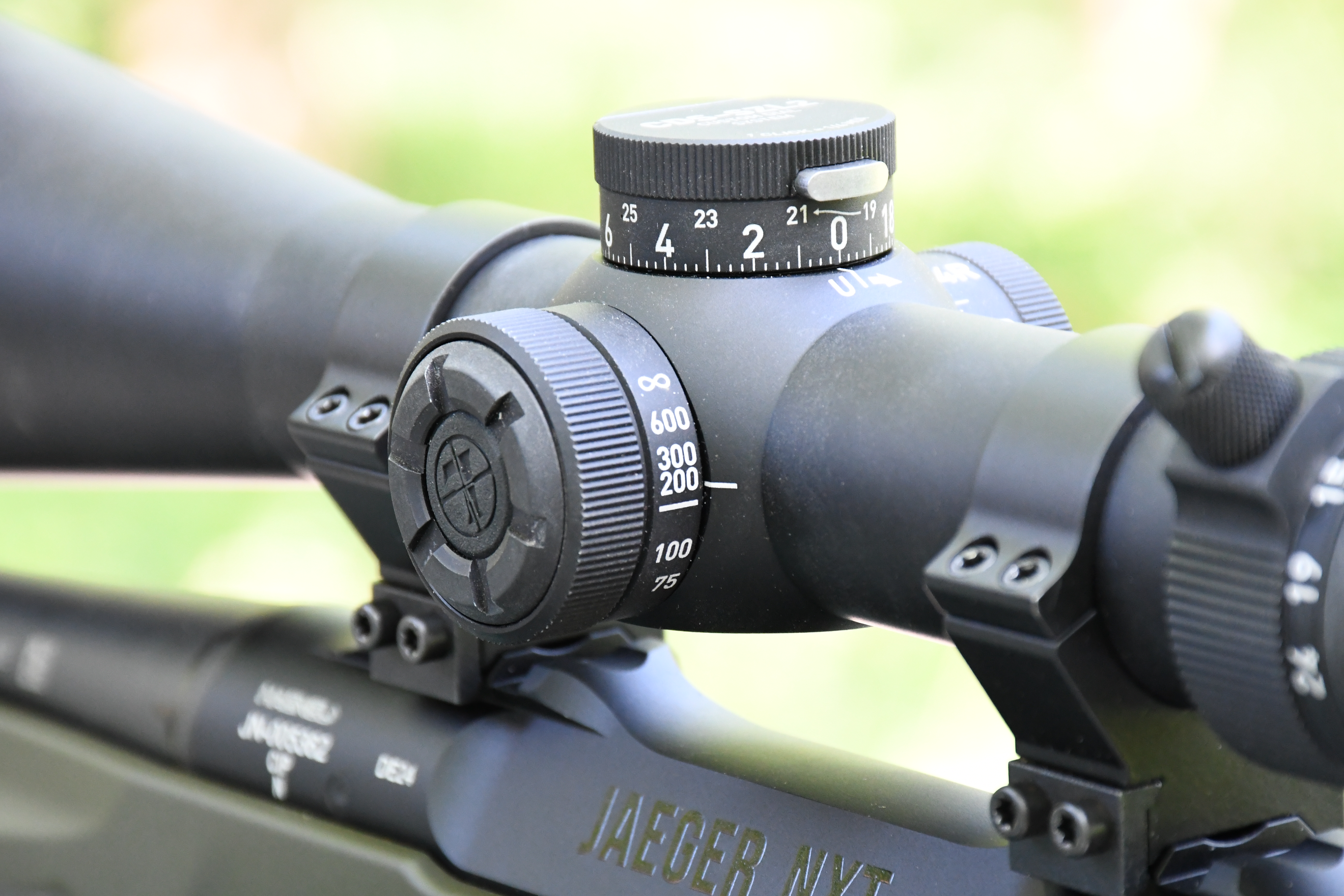
Although it may sound bulky due to the 34mm tube and high magnification, the scope remains relatively compact thanks to Leupold’s latest Custom Dial System (CDS) windage and elevation turrets. Both turrets are marked with ¼ MOA clicks, with 20 MOA per full revolution. A push-button unlocks each turret, allowing for quick, tactile adjustments with a reliable zero-stop return.
The right-side windage dial provides 10 MOA of adjustment left and right of zero, while the elevation dial offers nearly two full rotations for 38 MOA of travel, which is enough to take a .308 past 1000 yards, depending on other factors.
Although marked as standard in MOA, you can have custom-engraved dials made specifically to match your ballistics, hence the CDS name.
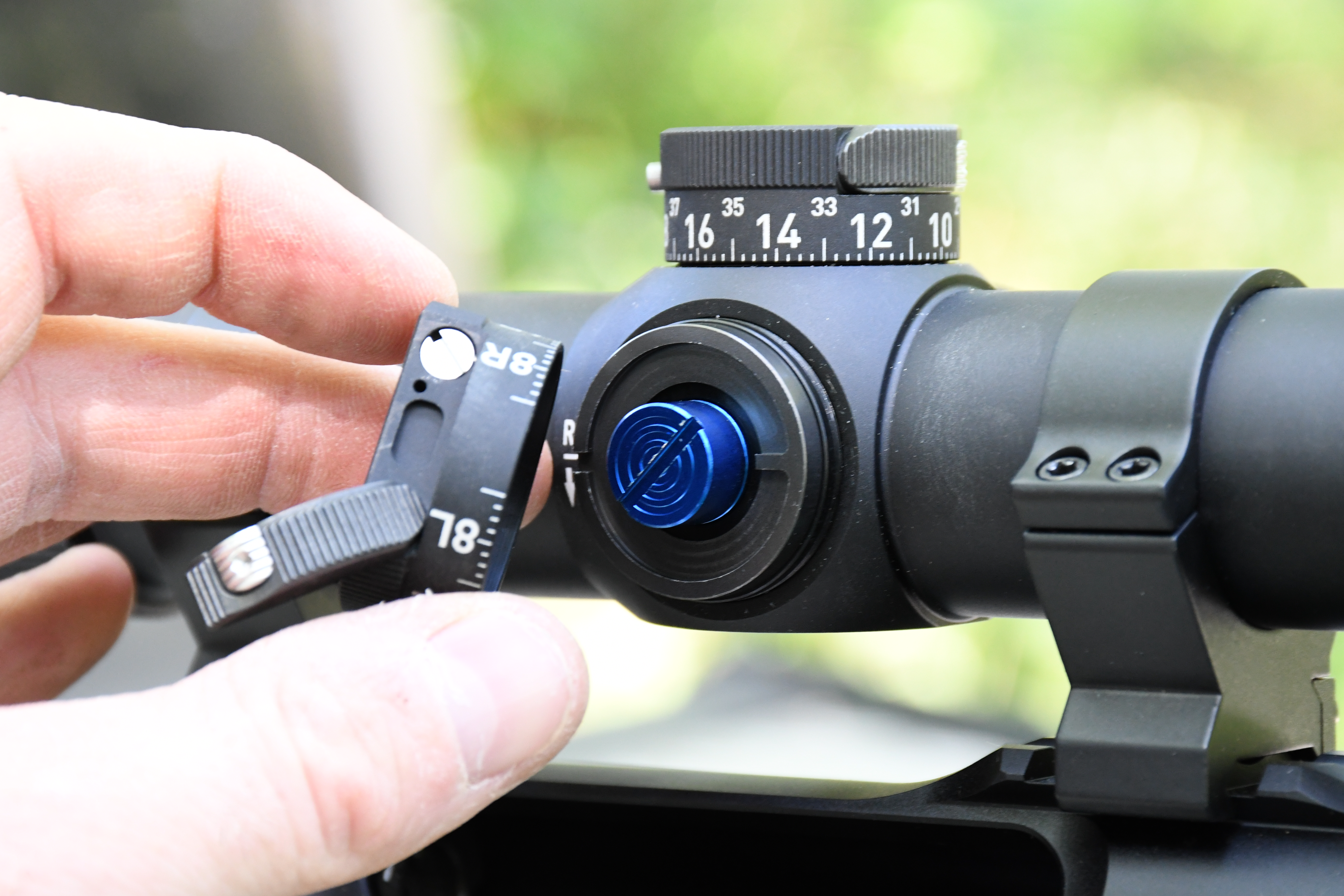
These turrets now feature the SpeedSet system, eliminating the need for tools when zeroing the scope or setting the zero-stop. A small spring-loaded button unlatches the dial’s locking lever, allowing you to lift it clear and essentially ‘float’ it. Both dials are easily removable, with no small parts to lose, granting you access to the central finger-adjustable blue rotor, too, if you lift them off completely.
This provides up to 100 MOA of total mechanical travel, making initial setup straightforward, intuitive, and fast.
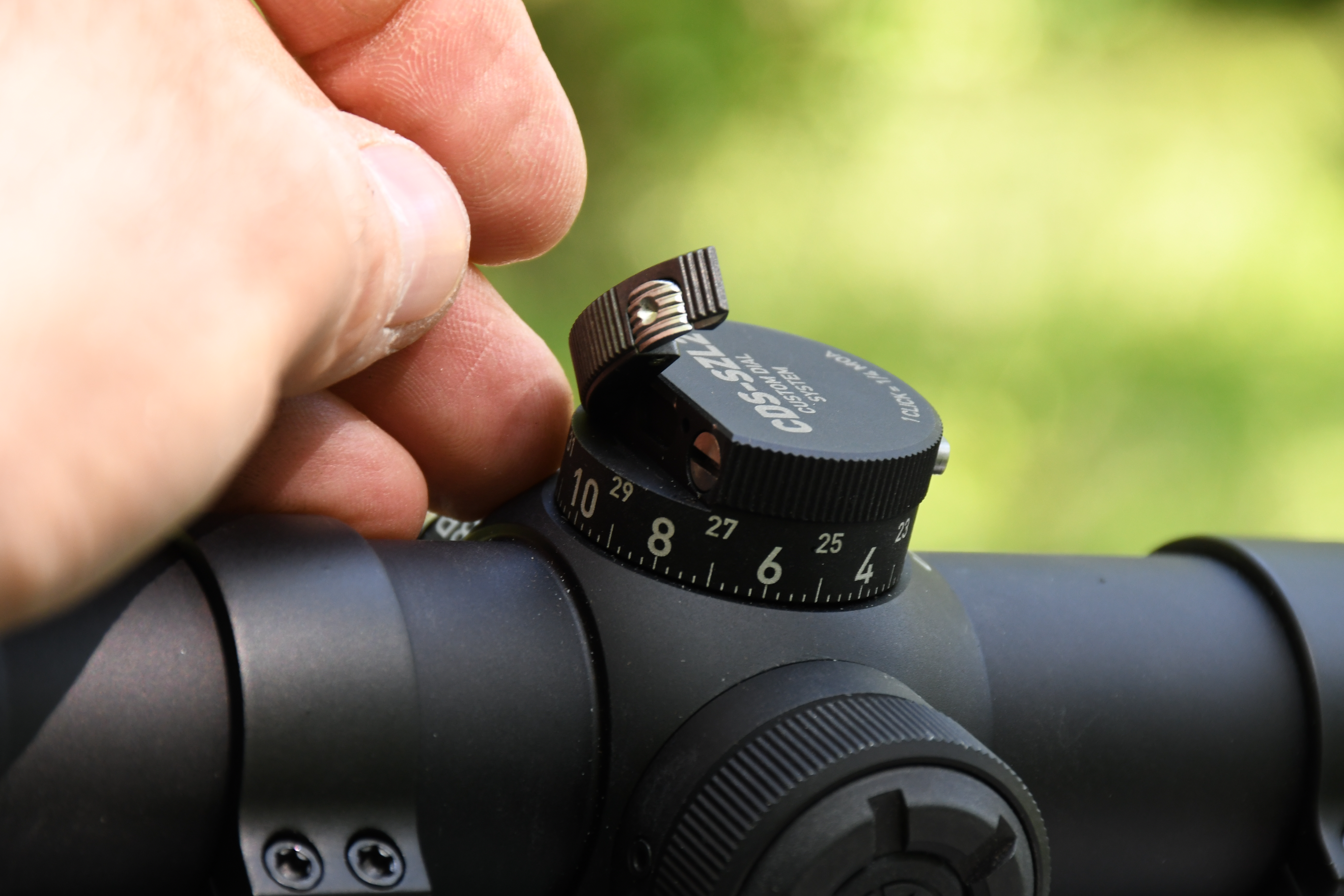
Once your zero is precisely set and the CDS dials are reinstalled, a simple lift of the SpeedSet lever lets you fine-tune adjustments incrementally, without overshooting your settings. It locks back in place instantly. In my opinion, this represents the future of turret design: functionally superb, even if the precision machining involved is costly. You can set up your turrets at the range without fiddling with Allen keys or worrying about misplacing them or other removable components.
Illumination, Parallax, and Other Key Features
The left-side parallax dial runs from 50 yards to infinity and offers crisp, reliable focus. Reticle illumination is red, controlled by a central rubber button on the end of the parallax knob. One press activates it, and additional presses cycle through eight brightness levels. Once it reaches the brightest setting, it flashes and cycles back down. Leupold’s Motion Sensor Technology (MST) automatically powers the reticle down after five minutes of inactivity. A single button press reactivates it at your previously selected brightness level. You can also turn it off manually with a long press, but honestly, why bother? The MST is effortless and extends the battery life up to 1,600 hours on low intensity. The CR2032 battery is housed under a cap at the end of the dial, which includes an integrated tool, though fingertip removal is possible.
A more subtle yet highly useful feature is the integrated cant indicator. If the rifle is not level, the reticle will blink on and off until you correct your aim, which is great for long-range precision shooting.
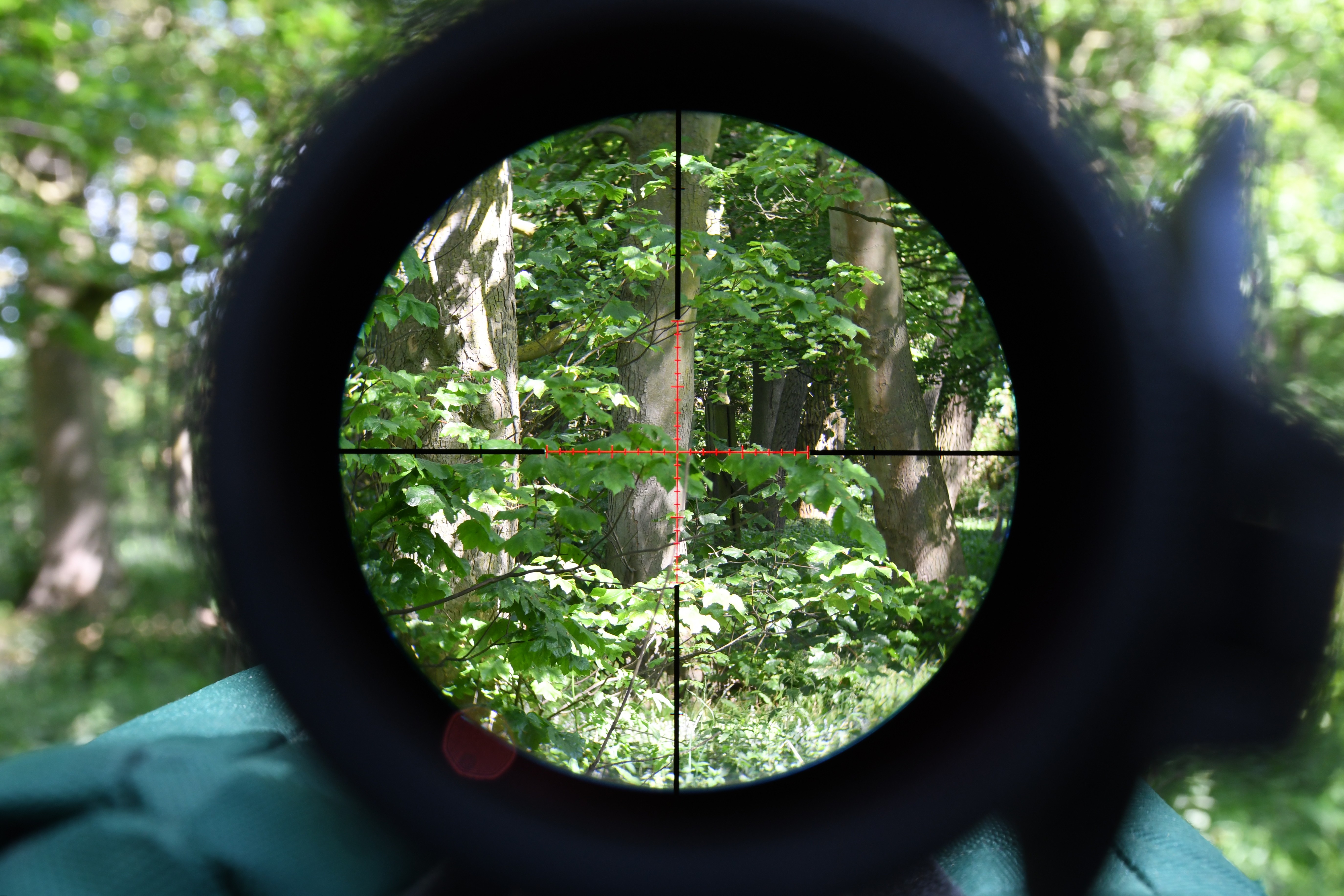
The second focal plane TMOA reticle provides hash marks across all the stadia lines for windage and elevation holds. Just remember that being in the second focal plane means accurate use of the reticle requires a specific magnification setting.
The illumination is crisp, with no flare or bleed, and remains visible in both low light and bright outdoor conditions.
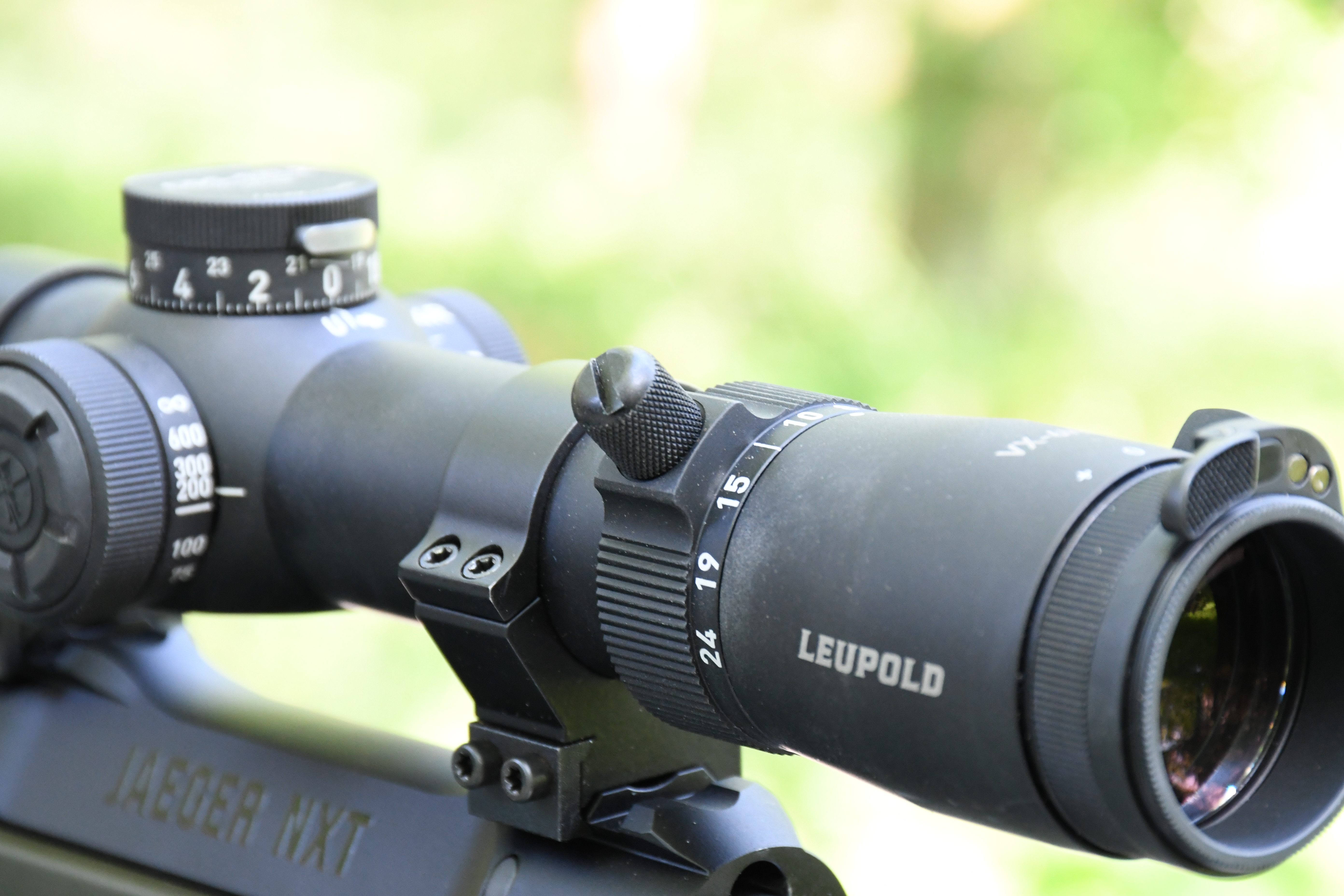
The magnification is adjusted smoothly and silently via the zoom ring at the front of the ocular body, and a throw lever is included for quicker operation. Both ends of the magnification range have defined stops, with no sense of internal mechanical movement. The eyepiece includes fast-focus adjustment, and best of all, eye relief only varies by 0.1” (2.54mm) across the magnification range. Some shooters may still associate Leupold with variable eye relief, but this is now a thing of the past and relates only to older designs. The latest optics are far more consistent.
How Good Are the Optics?
Leupold promotes a professional-grade optical system that claims “unmatched light transmission”, and to my eyes, the image remained delightfully bright and consistent. There was no stepped drop-off in light transmission as magnification increased, just smooth, linear progression. Low magnification in daylight was brilliant, and higher magnification in lower light was still impressively usable. Many scopes show abrupt brightness changes; the VX-6HD does not.
I started using Leupold scopes 20 years ago and always found their mechanics reliable, but now they’ve added optics that rival high-end European models, finally combining elite visual performance with proven durability and mechanical innovation.
Naturally, Leupold guarantees that their scopes will be waterproof, fog-proof, and shockproof. Their ‘Guard-ion’ hydrophobic lens coating effectively repels dirt and moisture, helping keep your sight picture clear.
Final Verdict: Is the VX-6HD Gen 2 Worth the Price?
I think this scope reflects a stable phase of design innovation and practical usability without becoming overcomplicated. The turrets offer everything required, even for target shooting, yet they haven’t made the scope too bulky or impractical for dynamic hunting situations. The eye relief is now stable at 95mm, with a relaxed eyebox and fast, sharp reticle focus at all times. However, this is an expensive scope that can ill afford any weak points, so I was pleased to find it a genuinely enjoyable optic to use.
The VX-6 range offers some great optics, with a variety of specifications to suit your exact needs. The 3-18×56 would be my favourite for general hunting requirements over mixed distances, with the greatest light admission area from the large objective, even if the 50mm option is slightly more compact.
Technical Specifications
- Name: Leupold 4-24×52 VX-6HD Gen 2, CDS-SZL2
- Price: £3,350
- UK Distributor: Viking Arms – www.vikingarms.com
- Body Tube: 34mm
- Weight: 740g
- Length: 14.5” / 368mm
- Reticle: TMOA, second focal plane, illuminated
- Click Values: 1/4 MOA
- Turret Revolution: 20 MOA
- Total Adjustment: 100 MOA (Elevation & Windage)
- Eye Relief: 3.7”–3.8” (94mm-96.5mm)
- Field of View (@100 yds): 28.1ft – 4.8ft
- Minimum Focus: 50 yards
- Battery: CR2032


