Gun Reviews >
 Find a Dealer >
 Find a Club >
 Competitions >
 videos >
 Reader Survey >
Reloading Basics: A Guide to Fixing Ammunition Chambering Issues
- Last updated: 13/08/2025
- Review

Ammunition should enter the chamber of your rifle easily, and the bolt should close smoothly and lock up with minimal resistance. Whether the round is travelling from the magazine or being placed into the chamber by hand, it should not need to be forced to travel forward and find its place in the chamber.
If you experience problems getting a round to chamber smoothly, it’s best not to try to drive it home by applying excessive force. If you try another round from the same batch of ammunition and you experience the same problem, then there is obviously an issue with your reloads that requires addressing. If the second round does chamber easily, then it may be that the first one was a defective one-off.
Ammunition may fail to chamber due to issues with either the gun or the ammunition, so both must be carefully examined.
Step 1: Could it be a Gun-Related Issue?
If your gun has not been properly cleaned, then a buildup of dirt and debris in the chamber can prevent rounds from entering smoothly. It is therefore important to ensure that, when cleaning the bore, you also pay close attention to the chamber.
It could also be that your gun has a particularly tight chamber. All guns are supposed to be manufactured with chambers that comply with SAAMI minimum dimensions, but occasionally guns do slip through with smaller chambers.

If your reloads are not chambering, it’s a good idea to check whether factory ammunition causes the same issues, as these rounds are manufactured to very tight, SAAMI-compliant specifications and tolerances, and should chamber easily and smoothly.
If your gun’s chamber is too small, this is an issue for a gunsmith to resolve, rather than something that you can sort out yourself. If the factory rounds do chamber OK, then this suggests that it is your reloads that are the problem.

Step 2: Is it an Ammunition-Related Issue?
One of the most common causes of ammunition being difficult to chamber is that the Cartridge Overall Length (COL) is too long. Most reloading data will include a COL for each given load to ensure that the completed round, with a particular bullet, will not be too long for the chamber. If your ammunition is too long, the bullet will be pushed into the rifling as you try to chamber the round. If the bolt does actually close, then the bullet being jammed into the rifling will cause the chamber pressure to be significantly increased when you fire. If your rounds are difficult to chamber, eject an unfired one and check for rifling marks on the bullet.
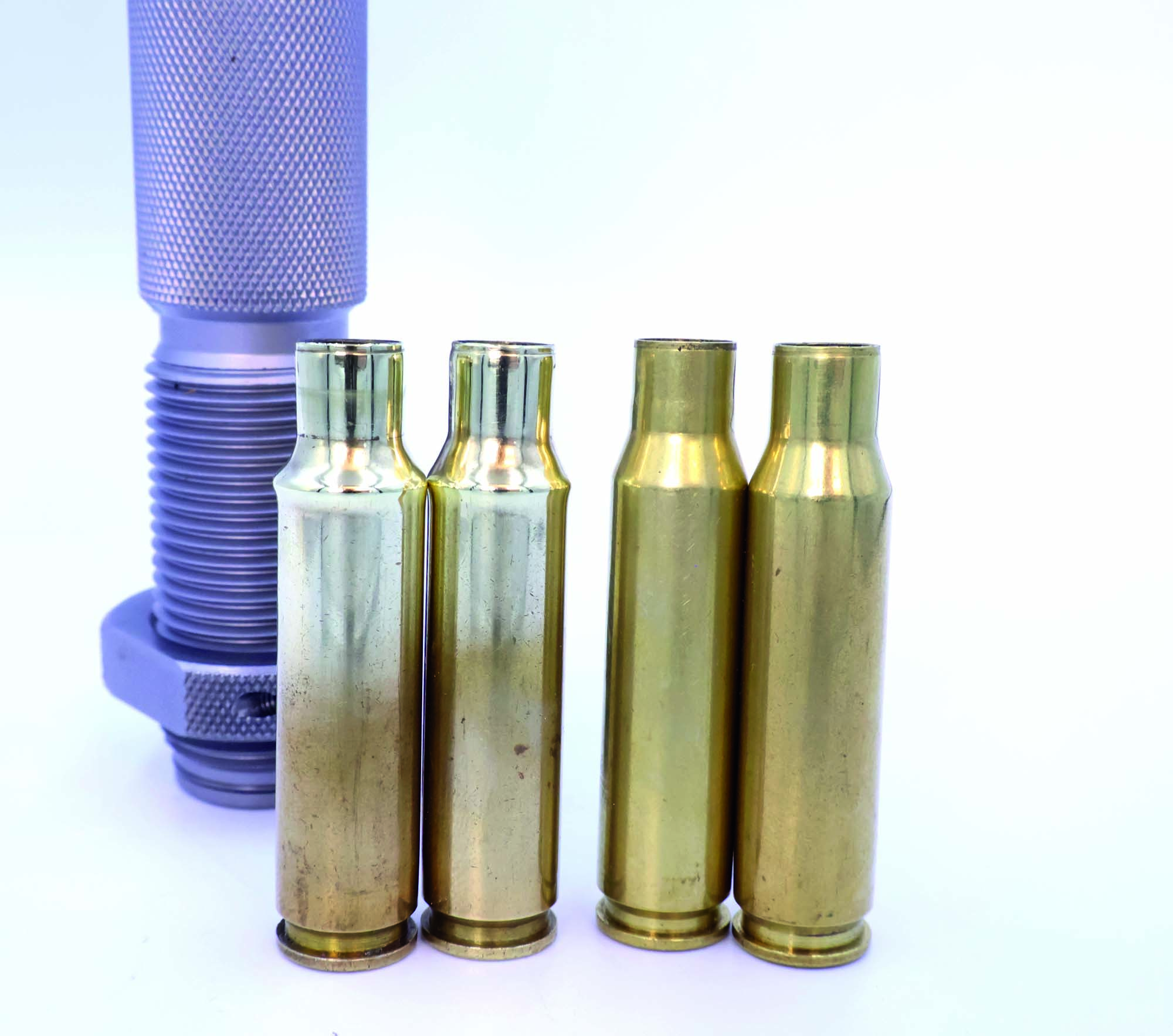
You should always check to ensure that you have not exceeded the COL stated in the data that you are using. When using different bullets of the same weight, their shape can vary, with some having longer ogives and slimmer tips than others. Those with shorter, fatter ogives might stick in the rifling and make chambering the round harder because they are wider at the point where they sit in the start of the rifling.
Another common, but less obvious, cause of rounds not chambering easily is incorrect resizing of the cases. Whether you resize full length or neck